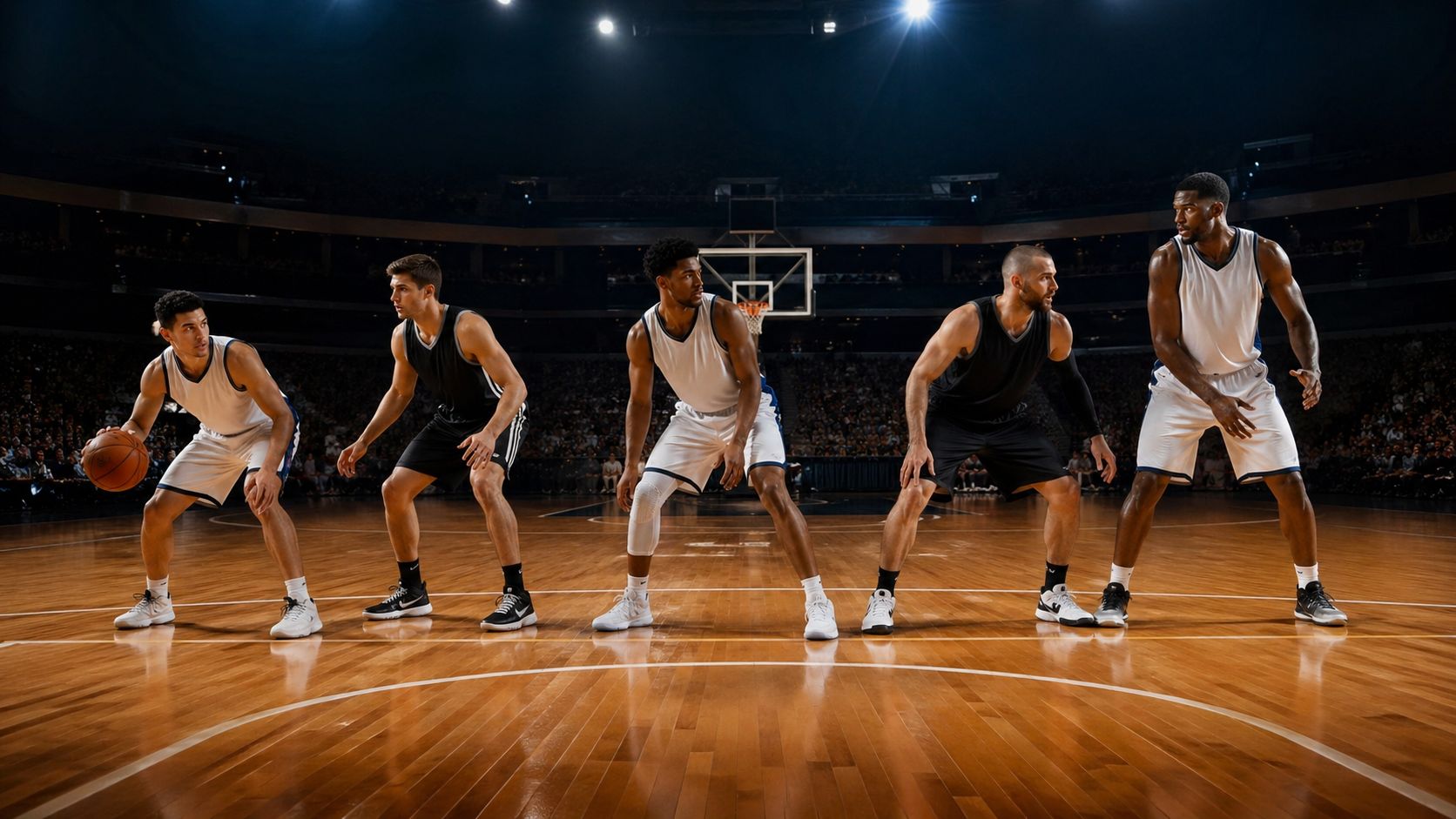
Basketball is often described as a game of speed, skill, and strategy, but beneath the highlight plays and buzzer-beaters lies a structured system that keeps everything flowing. At the heart of that system are the five traditional basketball positions: point guard, shooting guard, small forward, power forward, and center. Each role carries its own identity, responsibilities, and influence on the game. While modern basketball has become more fluid and positionless, understanding these classic roles remains essential for players, coaches, and fans alike. The five positions create a balance between ball handling, scoring, defense, and rebounding. They shape how a team attacks and defends, and they help define a player’s strengths and responsibilities. Whether you’re watching a high-level professional game or stepping onto the court yourself, these positions serve as the foundation of basketball knowledge.
A: The five traditional positions are point guard, shooting guard, small forward, power forward, and center.
A: Usually point guard, though modern teams may let any strong creator initiate the offense.
A: A shooting guard is usually expected to score, shoot from outside, move without the ball, and defend perimeter players.
A: Small forward is a wing position that sits between guards and frontcourt players.
A: A power forward rebounds, screens, defends bigger players, scores inside, and may stretch the floor with shooting.
A: A good center protects the rim, rebounds, finishes near the basket, sets screens, and controls the paint.
A: Yes, but shorter players often need strong shooting, speed, defense, or ball handling to fit different roles.
A: Yes, if they have ball handling, passing, shooting, and decision-making skills.
A: It means players are defined more by skill sets than by traditional height-based roles.
A: No single position is always most important; the best teams need balanced roles that work together.
The Floor General: Point Guard (PG) and the Art of Control
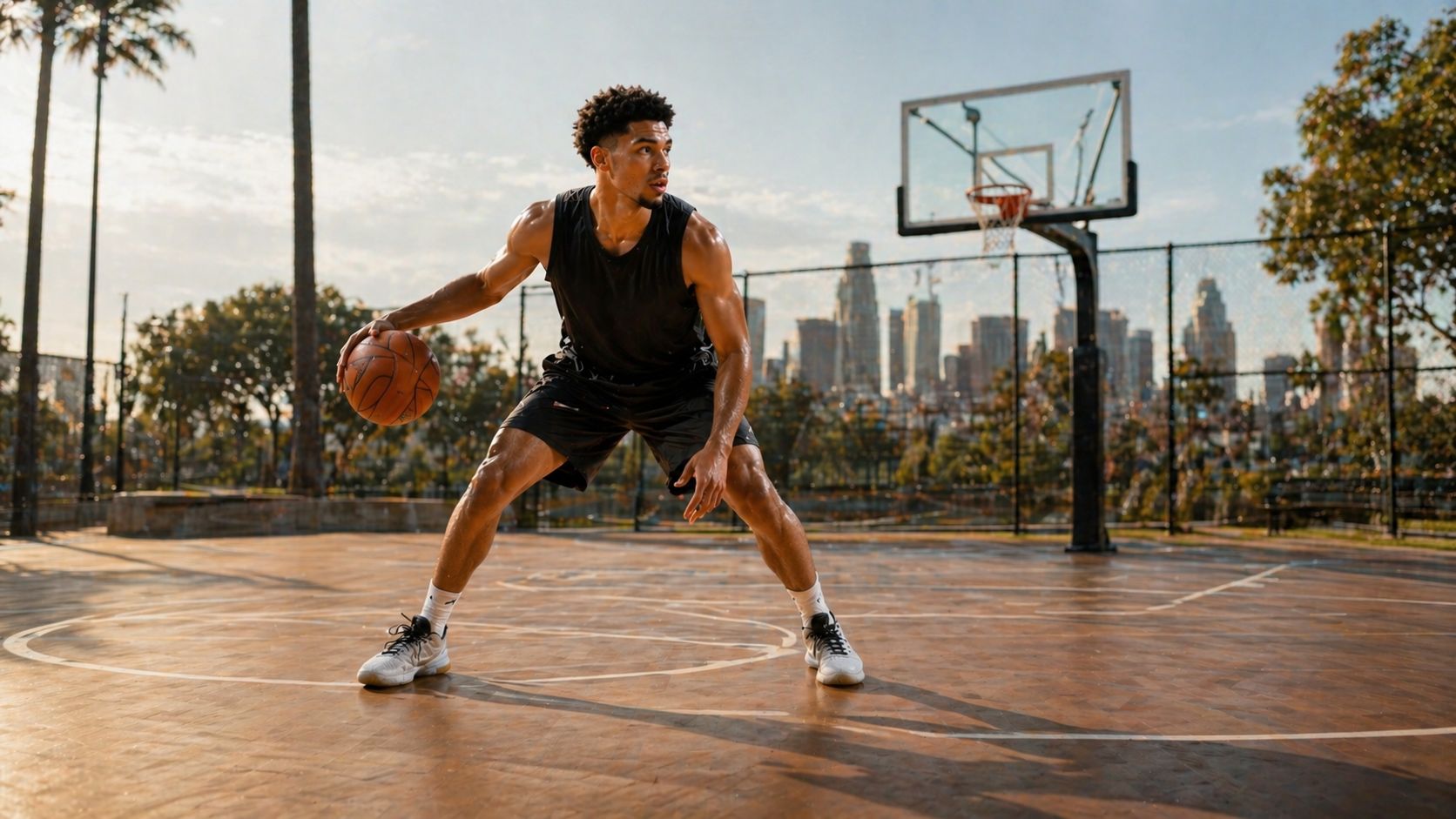
The point guard is often called the “floor general,” and for good reason. This player is responsible for orchestrating the offense, setting the pace, and ensuring that the team operates smoothly. A great point guard is not just skilled with the ball but also possesses a deep understanding of the game, reading defenses and making split-second decisions that can determine the outcome of a possession.
Ball handling is the most critical skill for a point guard. They bring the ball up the court, initiate plays, and maintain composure under pressure. Vision and passing ability are equally important, as the point guard must distribute the ball effectively and create opportunities for teammates. This role requires leadership, communication, and a high basketball IQ.
Defensively, point guards often guard the opposing team’s primary ball handler, applying pressure and disrupting offensive flow. In today’s game, many point guards are also strong scorers, capable of shooting from long range or attacking the basket. However, their primary responsibility remains controlling the game and elevating their teammates.
The Scoring Specialist: Shooting Guard (SG) and Offensive Firepower
If the point guard is the brain of the offense, the shooting guard is often its primary weapon. This position is built around scoring ability, particularly from the perimeter. Shooting guards are known for their ability to knock down jump shots, create their own offense, and capitalize on scoring opportunities.
A great shooting guard combines shooting accuracy with athleticism. They excel at moving without the ball, finding open space, and catching passes in rhythm. Many shooting guards are also skilled at driving to the basket, using speed and agility to get past defenders and finish at the rim.
While scoring is their main role, shooting guards must also contribute defensively. They often guard the opponent’s best perimeter scorer, requiring quick reflexes and strong defensive instincts. In modern basketball, the line between point guard and shooting guard has blurred, with many players sharing ball-handling responsibilities. Still, the shooting guard remains a key offensive force, capable of changing the momentum of a game in an instant.
The Versatile Weapon: Small Forward (SF) as the Ultimate Hybrid
The small forward is often considered the most versatile position on the court. This player blends the skills of guards and forwards, making them capable of contributing in nearly every aspect of the game. Small forwards are expected to score, defend, rebound, and facilitate, adapting to whatever the team needs.
Offensively, small forwards can score from multiple levels. They are comfortable shooting from the perimeter, attacking the basket, and even posting up smaller defenders. Their versatility makes them difficult to guard, as they can exploit mismatches and adjust their play style depending on the situation.
Defensively, small forwards are often tasked with guarding the opponent’s most dynamic player. This requires strength, speed, and awareness. They must be able to switch between guarding smaller guards and larger forwards, making adaptability a key trait.
Rebounding and hustle also play a significant role in this position. Small forwards often contribute on the boards and help initiate fast breaks. In many ways, they serve as the glue that holds a team together, bridging the gap between the backcourt and the frontcourt.
The Interior Enforcer: Power Forward (PF) and Physical Dominance
The power forward operates primarily in the frontcourt, bringing strength, toughness, and physicality to the game. Traditionally, this position is associated with rebounding, interior scoring, and defensive presence. Power forwards are often the workhorses of a team, battling in the paint and doing the gritty work that doesn’t always show up on the stat sheet.
Offensively, power forwards score close to the basket through post moves, putbacks, and mid-range shots. In modern basketball, many have expanded their range to include three-point shooting, creating more spacing and versatility. This evolution has transformed the role, allowing power forwards to stretch the floor and contribute in new ways.
Defensively, power forwards are responsible for protecting the paint, contesting shots, and securing rebounds. They must be strong enough to handle physical matchups while also being agile enough to switch onto smaller players when necessary. Their ability to control the boards and anchor the defense is crucial to a team’s success.
The Last Line of Defense: Center (C) and the Heart of the Paint
The center is traditionally the tallest player on the court and serves as the anchor of both the offense and defense. Positioned near the basket, the center plays a critical role in protecting the rim, rebounding, and scoring in the paint.
Offensively, centers rely on size and strength to score close to the basket. They use post moves, hooks, and dunks to finish plays efficiently. Setting screens is another key responsibility, helping teammates get open and creating opportunities within the offense.
Defensively, the center is the last line of defense. They protect the rim, block shots, and deter opponents from attacking the basket. Rebounding is also a major responsibility, as controlling the boards can determine possession and momentum.
In recent years, the role of the center has evolved significantly. Many centers now possess shooting ability and ball-handling skills, allowing them to contribute beyond the paint. Despite these changes, their core responsibilities remain rooted in physical dominance and defensive presence.
The Evolution of Positions: From Fixed Roles to Positionless Basketball
Basketball has undergone a dramatic transformation over the years, and one of the most significant changes has been the evolution of positions. While the traditional five-position system still provides a useful framework, modern basketball often emphasizes versatility and adaptability over rigid roles.
Players are now expected to develop a broader skill set, regardless of their position. Centers shoot three-pointers, point guards post up, and forwards handle the ball. This shift has led to the concept of “positionless basketball,” where players are defined more by their skills than their designated role.
This evolution has made the game faster, more dynamic, and more unpredictable. Teams prioritize spacing, ball movement, and versatility, creating new opportunities for players to impact the game in multiple ways. While the traditional positions still exist, they are no longer as strictly defined, allowing for greater creativity and innovation.
How Positions Work Together: Building Chemistry and Team Identity
Understanding individual positions is only part of the equation. The true beauty of basketball lies in how these roles come together to form a cohesive unit. Each position complements the others, creating a balanced and effective team.
The point guard initiates the offense, setting the stage for scoring opportunities. The shooting guard provides scoring punch, capitalizing on those opportunities. The small forward connects the pieces, contributing across the board. The power forward brings physicality and rebounding, while the center anchors the defense and controls the paint.
When these roles are executed effectively, the result is a seamless flow of movement, passing, and scoring. Communication and chemistry are essential, as players must trust each other and understand their responsibilities. A well-balanced team leverages the strengths of each position, creating a system that is greater than the sum of its parts.
Mastering the Game: Choosing Your Position and Developing Your Role
For players looking to improve their game, understanding basketball positions is a crucial step. While natural abilities and physical attributes often influence position, skill development and adaptability play an equally important role. A player with strong ball-handling and vision may thrive as a point guard, while someone with shooting ability and scoring instincts may excel as a shooting guard. Versatile athletes may find their place as small forwards, while those with size and strength may gravitate toward power forward or center roles. However, modern basketball encourages players to develop a wide range of skills, regardless of position. Learning to shoot, pass, defend, and rebound can open new opportunities and make a player more valuable on the court. The goal is not just to fit into a position but to understand the game as a whole and contribute in meaningful ways. Ultimately, basketball positions are more than just labels. They represent a framework for understanding the game, a guide for player development, and a foundation for team success. Whether you’re a beginner or an experienced player, mastering these roles can elevate your understanding and appreciation of the sport, bringing you closer to the rhythm and strategy that define basketball at its highest level.