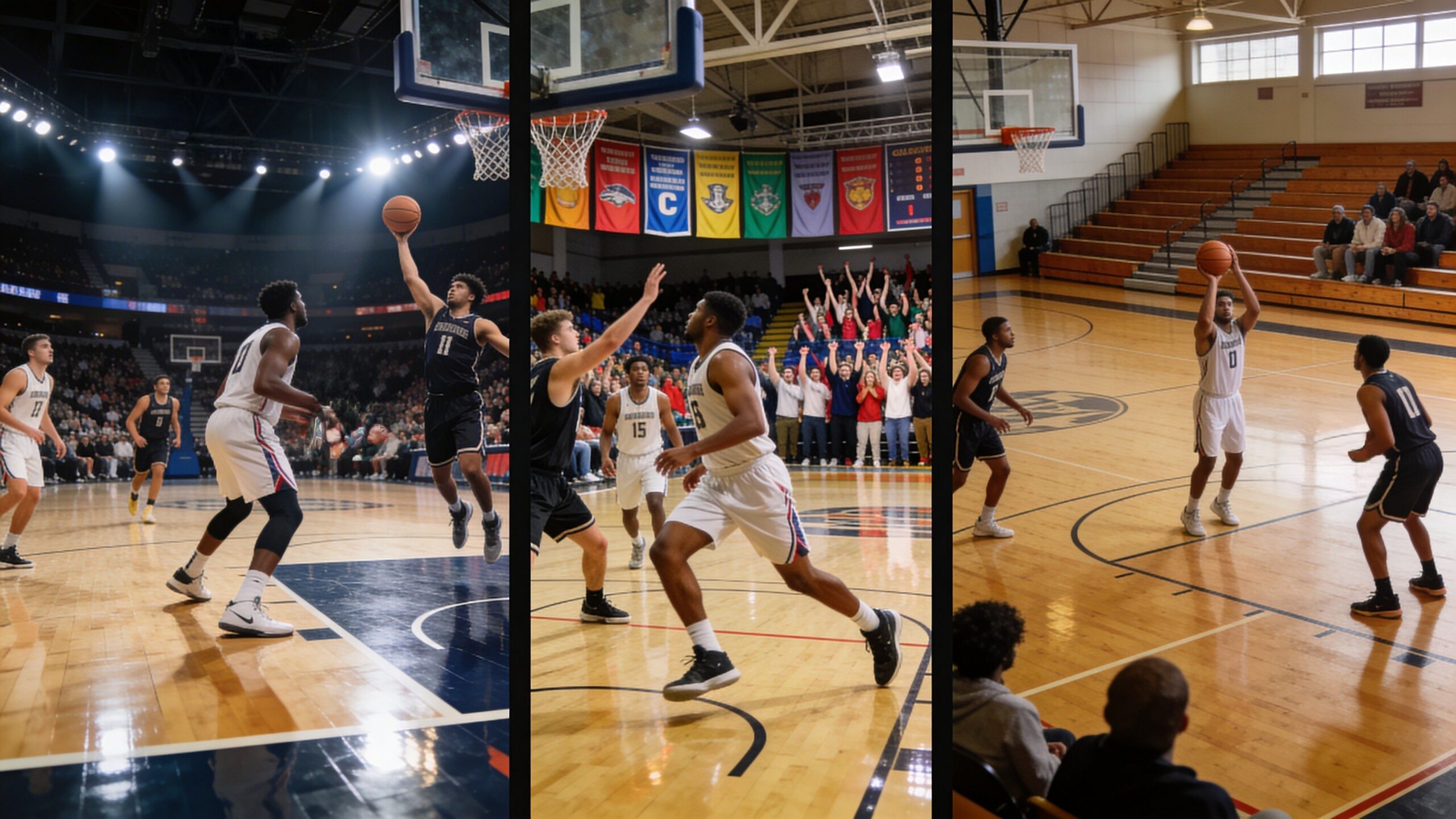
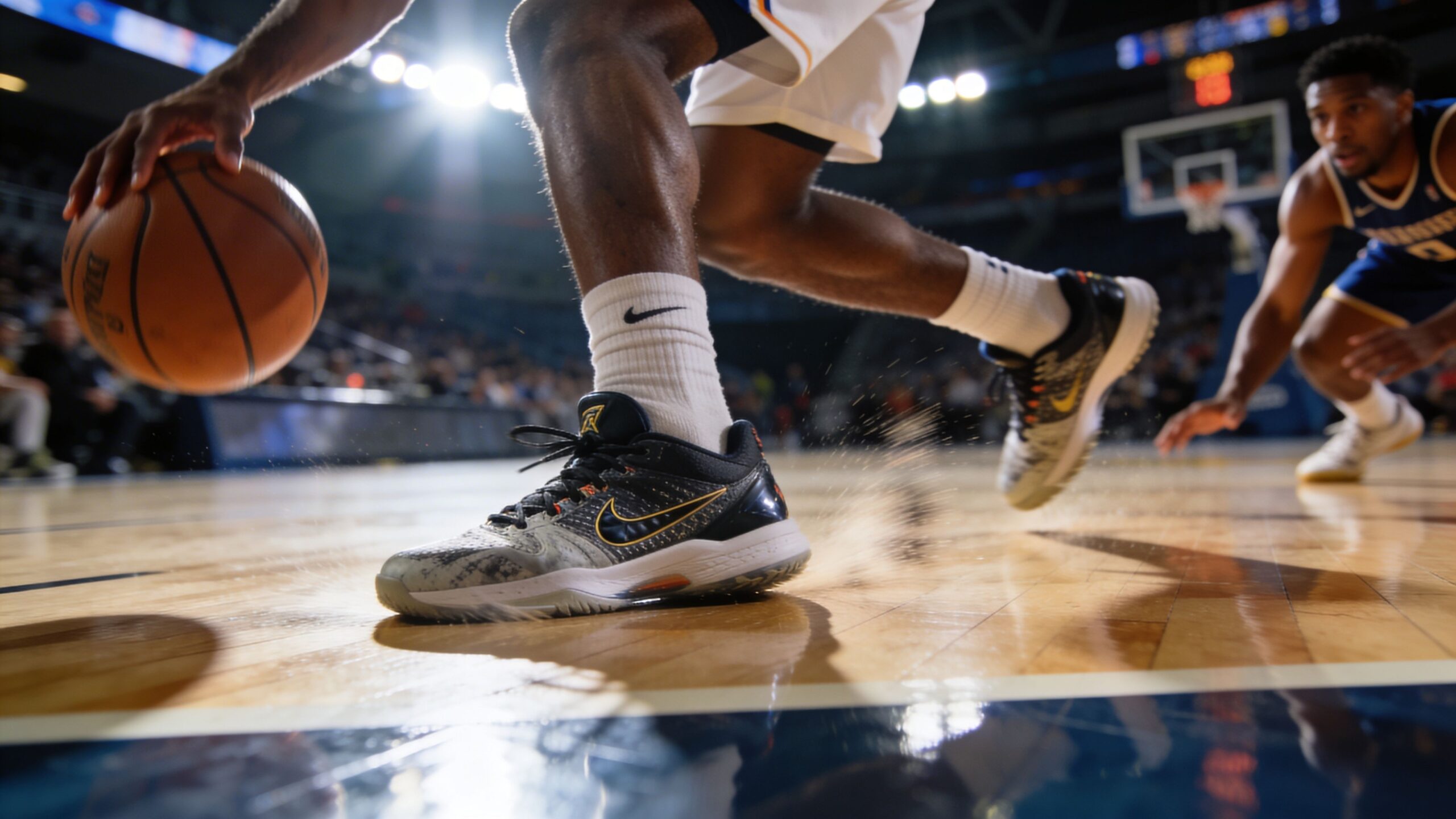
Basketball looks fast, loud, and complicated when you first watch it. The whistles, the hand signals, the sudden stoppages, and the nonstop motion can make it feel like there is a secret language everyone else already knows. The truth is that basketball is one of the most intuitive sports in the world once the basic rules click. At its core, it is a simple game built around movement, spacing, and decision-making. This guide breaks down basketball rules in a way that feels natural, practical, and friendly for new and casual players. Whether you are stepping onto a court for the first time or trying to follow a game without confusion, this article gives you the confidence to understand what is happening and why.
A: Dribble before you move, and when you stop, keep your pivot foot planted.
A: You can’t dribble, stop, then dribble again—once you pick it up, pass or shoot.
A: If the defender is set and you crash into them, it’s often a charge; if they’re moving into you late, it’s often a block.
A: Because your hand/arm hits the shooter or ball-handler’s body instead of cleanly hitting the ball.
A: Touching the ball on its way down toward the hoop or while it’s above the rim cylinder.
A: Yes—if you land and then move your feet without dribbling, that’s when traveling can happen.
A: After enough team fouls in a period, common fouls can result in free throws instead of just a side-out.
A: After your team controls the ball in the frontcourt, you usually can’t send it back over midcourt.
A: Light contact happens, but using your hand/arm to steer a player is commonly called—especially on the perimeter.
A: No—pickup games often tweak things (make-it-take-it, no free throws, call your own fouls).
The Objective of the Game: Score More, Play Smart
Basketball is ultimately about scoring more points than the other team within a set amount of time. Two teams compete by advancing the ball into their offensive half of the court and attempting to score by shooting the ball through the opponent’s hoop. The hoop is ten feet off the ground, and every possession becomes a small battle of timing, positioning, and control. A typical team has five players on the court at once, each contributing to offense and defense. The game flows back and forth, with teams switching roles constantly, which is why basketball feels so fast-paced and exciting even at a casual level.
The Court and the Clock: Where the Game Lives
Understanding the court makes everything else easier. A standard basketball court is divided into two halves, with a hoop on each end. The midcourt line separates offense from defense and plays a key role in timing rules. Games are divided into quarters, and while the exact length can vary depending on the level of play, professional games use four quarters of twelve minutes. College, high school, and recreational leagues often use shorter periods. The clock stops frequently for fouls, violations, and timeouts, which means the final minutes of a game can stretch dramatically as teams fight for every possession.
Scoring Explained: Why Some Shots Matter More
Scoring in basketball depends on where and how a shot is taken. A made basket from inside the three-point arc counts as two points. Shots taken from beyond the three-point line are worth three points, rewarding players who can shoot accurately from distance. Free throws, which are awarded after certain fouls, are worth one point each and are taken from a fixed line with no defenders present. These different scoring values create strategy, encouraging teams to balance safe, high-percentage shots with riskier attempts that offer greater reward.
Moving the Ball: Dribbling, Passing, and Traveling
Basketball requires constant movement, but that movement is governed by clear rules. Players are allowed to move freely on the court only while dribbling the ball. Once a player stops dribbling, they must either pass or shoot. Taking too many steps without dribbling is called traveling, and it results in a turnover. Double dribbling occurs when a player stops dribbling and then starts again, which is also illegal. Passing, on the other hand, is always encouraged and is one of the fastest ways to move the ball and create scoring opportunities. These rules exist to keep the game flowing and to reward skillful control rather than raw speed alone.
Time-Based Rules: Shot Clocks and Backcourt Violations
To prevent teams from stalling, basketball uses several time-based rules that keep the action moving. The shot clock limits how long a team can possess the ball before attempting a shot, forcing offensive urgency. Once a team crosses the midcourt line, they cannot return the ball to the backcourt, a rule known as the backcourt violation. This ensures forward momentum and discourages delay tactics. Together, these timing rules shape the rhythm of the game and explain why offenses often feel rushed, especially late in the shot clock.
Defense and Fouls: Playing Hard Without Crossing the Line
Defense is about positioning, anticipation, and discipline. Players are allowed to contest shots and block passes, but they must avoid illegal contact. A personal foul is called when a defender makes excessive contact with an opponent, such as hitting an arm during a shot or blocking movement unfairly. Team fouls accumulate over a quarter, eventually leading to free throws for the opposing team. Some fouls are more serious, such as flagrant fouls, which involve dangerous or unnecessary contact. Understanding fouls helps explain why referees stop play and why certain moments shift momentum so quickly.
Violations That Stop Play: The Little Things That Matter
Not every whistle is about contact. Violations are rule breaks that do not involve fouls but still result in a turnover. Common violations include stepping out of bounds, carrying the ball while dribbling, or taking too long to inbound the ball. There are also lane violations during free throws, where players move too early before the ball hits the rim. These rules may seem picky at first, but they exist to maintain fairness, spacing, and structure. Once you recognize them, the game becomes much easier to follow.
Substitutions and Timeouts: Strategy Beyond the Ball
Basketball is not just about what happens while the ball is in play. Coaches can substitute players freely during stoppages, allowing teams to adjust strategy, manage fatigue, or respond to matchups. Timeouts pause the game and give teams a chance to regroup, draw up plays, or slow down momentum. These moments often become turning points, especially late in close games. Watching how teams use substitutions and timeouts adds a deeper layer of appreciation for the sport.
Overtime and Tiebreakers: When the Game Refuses to End
If the score is tied at the end of regulation, the game moves into overtime. Overtime periods are shorter than regular quarters, but the intensity increases dramatically. Teams continue playing additional overtime periods until a winner is decided. There are no draws in basketball, which is why close games often become unforgettable. Understanding overtime rules helps explain why players look exhausted yet energized during these moments, knowing every possession could decide the outcome.
Basketball at Different Levels: Same Game, Small Tweaks
While the core rules of basketball remain consistent, small differences appear depending on the level of play. Professional, college, and recreational leagues may vary in court size, game length, shot clock duration, and foul limits. These adjustments are designed to match the skill and endurance of the players involved. Despite these differences, the fundamentals stay the same, making basketball one of the easiest sports to transition into as a player or fan.
Playing for Fun: What Really Matters on the Court
For new and casual players, the most important rule is enjoyment. Basketball rewards effort, teamwork, and awareness more than perfection. Knowing the basic rules allows you to play confidently without overthinking every movement. The game becomes less about avoiding mistakes and more about reacting, learning, and improving with each run up and down the court. Once the rules feel familiar, basketball transforms from something confusing into something instinctive and exciting.
From Confusion to Confidence: Your Next Step in the Game
Basketball does not demand mastery on day one. It invites curiosity, repetition, and growth. By understanding how scoring works, how movement is controlled, why fouls are called, and how time shapes every possession, you gain a clearer picture of the game’s rhythm. Whether you are watching from the stands, playing pickup with friends, or stepping into an organized league, these rules give you a foundation to enjoy basketball the way it is meant to be played. The court is no longer intimidating. It is an open space waiting for your next pass, shot, or moment of discovery.