Few calls in basketball spark as much instant reaction as traveling. One second, a player is gliding toward the basket with apparent control and confidence, and the next, a whistle cuts through the noise, halting everything. Fans groan, players gesture in disbelief, and commentators rewind the play in slow motion. Traveling is one of the most fundamental violations in basketball, yet it remains one of the most misunderstood, even among experienced viewers. At its core, traveling is about movement without proper dribbling. It governs how players can move while holding the basketball and ensures that the game maintains its balance between skill and fairness. Without this rule, players could simply run with the ball, turning basketball into something entirely different. The beauty of the sport lies in its rhythm, the dribble, the footwork, and the precise coordination required to move legally across the court. Traveling exists to protect that rhythm.
A: It is a violation that happens when a player holding the ball moves their feet illegally without a proper dribble.
A: It gets called to stop players from gaining an unfair advantage by taking extra steps or moving the pivot foot illegally.
A: Not always. It depends on when the player gathers the ball and whether the steps happen within the legal rule sequence.
A: It is the foot a player keeps anchored while turning or protecting the ball after ending the dribble.
A: Yes, if it is executed within the rules of control and landing without adding illegal extra movement.
A: NBA interpretations around the gather and footwork can differ from youth and school-level enforcement.
A: It can be, especially if the player rolls over, slides illegally, or gets up without dribbling.
A: On travel plays, officials focus heavily on the feet, pivot, and timing of control.
A: Yes, if the pivot foot moves illegally or the player takes too many steps after gathering.
A: Learn pivot foot rules, practice jump stops, and work on starting the dribble before moving illegally.
The Foundation of Movement: What Counts as a Travel
To understand why traveling is called, you first need to understand what defines legal movement in basketball. When a player gains possession of the ball, they are allowed to establish a pivot foot. This pivot foot becomes the anchor point around which all movement must occur unless the player begins a dribble.
If a player lifts their pivot foot before releasing the ball to dribble or pass, it results in a travel. Similarly, taking too many steps without dribbling is a clear violation. While this may sound simple, the reality becomes more complex when speed, athleticism, and game situations are involved.
In modern basketball, especially at higher levels, players are often allowed what is commonly referred to as a gather step. This means that once a player collects the ball while moving, they are permitted a controlled sequence of steps before shooting or passing. The interpretation of this gather step is one of the biggest reasons traveling can appear inconsistent to viewers.
The rule is not designed to restrict creativity but to ensure that movement remains skill-based rather than purely physical. Every step must be accounted for, and every motion must align with the established guidelines.
The Pivot Foot Puzzle: Why Footwork Matters So Much
The pivot foot is the centerpiece of traveling rules. It determines what a player can and cannot do once they stop dribbling. A player may rotate on their pivot foot, pass, or shoot, but they cannot lift it and then return it to the floor before releasing the ball.
This rule might seem straightforward, but in live gameplay, it becomes incredibly nuanced. Players often perform quick spins, fakes, and step-through moves that challenge even the most experienced referees. A legal move in one situation can look nearly identical to a travel in another, depending on timing and foot placement.
Great players spend countless hours mastering footwork precisely because of this rule. Moves like the spin move, euro step, and jab step all rely on precise control of the pivot foot. When executed correctly, they are nearly unstoppable. When executed incorrectly, they result in a turnover.
The pivot foot rule reinforces the importance of discipline and technique. It rewards players who understand the game at a deeper level and punishes those who rely solely on athleticism.
The Gather Step Debate: Why Traveling Looks Different Today
One of the most talked-about aspects of traveling in modern basketball is the gather step. As the game has evolved, so too has the interpretation of how players collect the ball while moving. In the past, stricter interpretations often limited players to fewer steps, but today’s game allows for more fluid motion.
The gather step occurs when a player is in motion and gains control of the ball. From that moment, they are typically allowed two additional steps before shooting or passing. This has opened the door for creative moves like the euro step, where players take wide, lateral steps to evade defenders.
However, this evolution has also led to confusion. What some see as a legal gather and two steps, others perceive as traveling. The difference often comes down to when control of the ball is established, a detail that can be difficult to judge in real time.
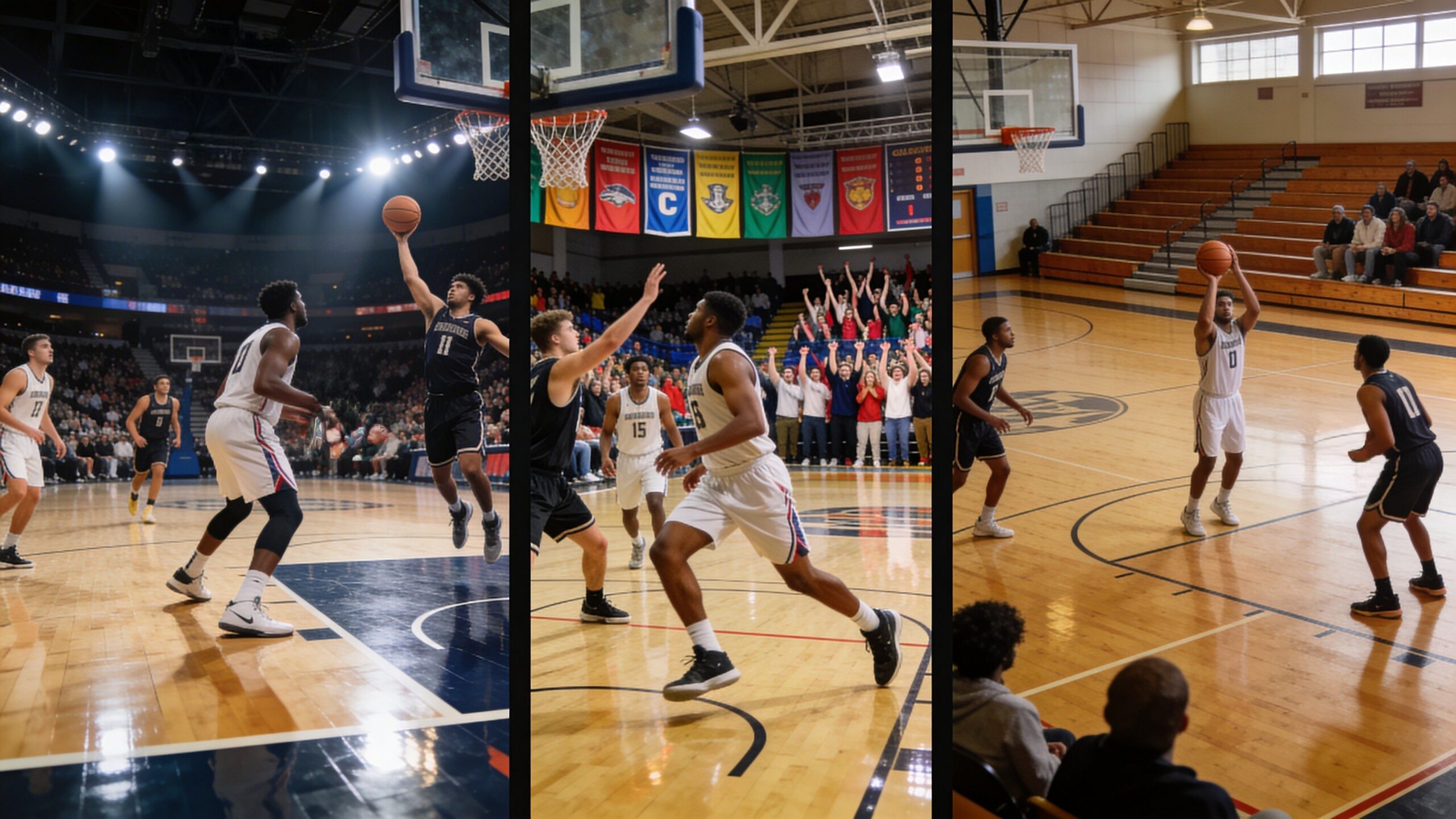
At the professional level, particularly in the NBA, the gather step is interpreted more liberally, allowing for more dynamic offensive play. In college and high school basketball, the interpretation is generally stricter, leading to more frequent traveling calls.
This variation across levels is one of the reasons fans sometimes feel that traveling is inconsistently enforced. In reality, the rules are being applied within slightly different frameworks.
Common Traveling Violations You See in Every Game
Traveling can take many forms, and some violations appear more frequently than others. One of the most common is the classic “too many steps” scenario, where a player takes more than the allowed number of steps without dribbling. This often happens during fast breaks or when players are trying to avoid defenders.
Another frequent violation is the shuffle of the pivot foot. Players may unintentionally slide or lift their pivot foot while attempting to make a move, resulting in a travel. This is especially common in high-pressure situations where quick decisions are required.
There is also the situation where a player begins a dribble incorrectly. If the ball does not leave the player’s hand before the pivot foot is lifted, it is considered traveling. This can be subtle and difficult to detect, but it is a key part of the rule.
Jump stops can also lead to traveling calls if not executed properly. While a legal jump stop allows a player to land on both feet simultaneously, any imbalance or extra step can result in a violation.
Each of these scenarios highlights how traveling is less about obvious mistakes and more about precise execution. Even small errors can lead to a whistle.
Why Referees Call Traveling: The Balance of Fair Play
Referees call traveling to maintain the integrity of the game. Without strict enforcement of movement rules, players could gain unfair advantages by taking extra steps or manipulating their footwork. This would disrupt the balance between offense and defense, making it harder for defenders to compete.
Traveling calls also ensure consistency. Players at all levels are expected to follow the same fundamental principles, even if interpretations vary slightly. By enforcing these rules, referees create a predictable framework within which the game can be played.
However, officiating traveling is not easy. Referees must make split-second decisions while tracking multiple players, the ball, and the overall flow of the game. They must determine when a player gains control of the ball, identify the pivot foot, and count steps, all in real time.
Because of this complexity, some borderline plays may go uncalled, while others may be flagged. This is part of the human element of the sport, and it adds to the ongoing debate about consistency in officiating.
Ultimately, the goal of calling traveling is not to penalize players unnecessarily but to preserve the structure and fairness of the game.
How Traveling Rules Shape Player Development
Traveling rules play a crucial role in how players develop their skills. From a young age, players are taught the importance of proper footwork, balance, and control. These fundamentals become the building blocks for more advanced moves as they progress through higher levels of competition.
In high school basketball, coaches emphasize strict adherence to traveling rules to instill discipline. Players learn to be mindful of their movements and to execute plays with precision. This foundation prepares them for the increased speed and complexity of college basketball.
At the college level, players refine their skills and adapt to slightly different interpretations of the rules. They learn to incorporate advanced footwork techniques while staying within the boundaries of legality.
By the time players reach the professional level, they have mastered the art of movement. They understand how to use the gather step, how to manipulate defenders with footwork, and how to maximize their effectiveness without committing violations.
Traveling rules are not just about preventing mistakes; they are about guiding players toward excellence. They encourage creativity within structure and reward those who can push the limits without crossing them.
The Art Within the Rules: Creativity Without Breaking the Game
One of the most fascinating aspects of basketball is how players find ways to innovate within the constraints of the rules. Traveling, while restrictive in nature, has actually inspired some of the most creative moves in the game. The euro step, for example, is a direct result of players maximizing their allowed steps to navigate around defenders. Spin moves, step-backs, and hesitation drives all rely on precise timing and footwork to remain legal. These moves add flair and excitement to the game while still adhering to its rules. The best players in the world understand that limitations can fuel creativity. They study the rules, experiment with new techniques, and develop signature moves that push the boundaries of what is possible. For fans, this creates a dynamic viewing experience. Every drive to the basket, every pivot in the post, and every step-back jumper carries an element of anticipation. Will it be a highlight play or a traveling violation? That tension is part of what makes basketball so engaging. In the end, traveling is more than just a rule. It is a fundamental principle that shapes the way the game is played, taught, and enjoyed. It ensures that basketball remains a sport of skill, precision, and creativity, where every step truly matters.