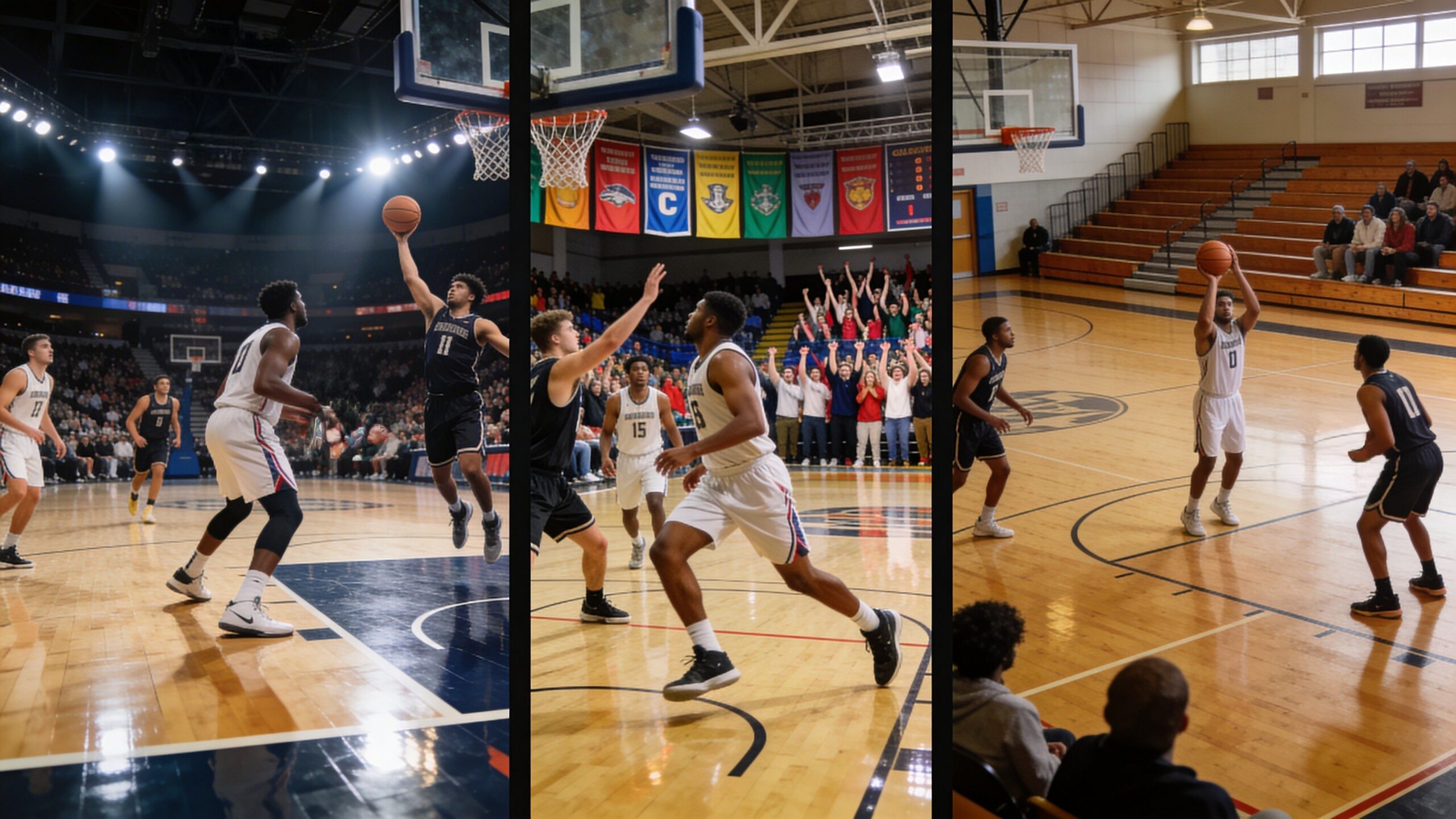
Basketball may look the same whether you’re watching a Friday night high school matchup, a packed college arena, or a primetime NBA showdown, but beneath the surface, the rules shaping each level create entirely different experiences. From game length and court dimensions to defensive restrictions and foul interpretations, each level of basketball is carefully designed to match the skill, development, and entertainment goals of its players. Understanding these differences not only deepens appreciation for the sport but also reveals how the game evolves as athletes climb the competitive ladder. At first glance, the differences may seem subtle. A slightly shorter three-point line or a different shot clock might not appear significant. But in reality, these rule changes fundamentally alter pacing, strategy, player development, and even the physical demands of the game. What works in high school might fail in college, and what dominates in college might struggle under NBA rules. This layered structure is what makes basketball such a fascinating sport to study and watch.
A: The biggest differences are game length, shot clock length, defensive rules, and the overall spacing created by the court markings.
A: The 24-second shot clock, longer game, wider spacing, and elite athleticism all speed up the action.
A: No. Shot clock use in high school depends on the state or governing body.
A: In the NBA it is 6 fouls, while in college and high school it is usually 5.
A: Those levels do not use the NBA defensive three-second rule, so defenders can stay packed in the lane longer.
A: No. The NBA line is deepest, college is shorter, and high school is shortest.
A: It is simply part of the NCAA men’s rule structure and affects bonus fouls, clock strategy, and momentum differently than quarters do.
A: It limits where defenders can establish position for charge calls near the basket, protecting offensive flow and player safety.
A: No major difference—the basket height remains 10 feet across these levels.
A: High school is often where players build the strongest foundation, while college and the NBA add layers of complexity and specialization.
Game Length and Tempo: How Time Shapes the Action
One of the most noticeable differences between NBA, college, and high school basketball lies in the length and structure of the game. In the NBA, games are divided into four 12-minute quarters, totaling 48 minutes of play. This extended format allows for deeper rotations, more scoring opportunities, and dramatic momentum swings that can stretch across long stretches of gameplay.
College basketball, governed primarily by NCAA rules, uses two 20-minute halves instead of quarters. While the total game time is shorter at 40 minutes, the structure of halves changes how teams manage fouls, timeouts, and momentum. Coaches must carefully plan rotations and strategies without the natural reset that quarters provide.
High school basketball typically features four 8-minute quarters, resulting in a 32-minute game. This shorter format emphasizes efficiency and execution, as there is less time to recover from mistakes. Players often feel the pressure to perform immediately, and games can shift quickly with a few key plays.
The differences in game length directly impact tempo. NBA games tend to be faster-paced with higher scoring totals, while college and high school games often emphasize structured offenses and deliberate possessions. The shorter the game, the more valuable each possession becomes.
Court Dimensions and Three-Point Lines: Space Changes Everything
While all levels of basketball share the same basic court layout, subtle differences in dimensions create significant changes in gameplay. The NBA court is the largest in terms of spacing, particularly when it comes to the three-point line, which sits 23 feet 9 inches from the basket at the top of the key. This extended distance forces players to develop elite shooting range and creates more room for offensive movement.
In college basketball, the three-point line is shorter at 22 feet 1.75 inches. High school courts use an even closer line, typically around 19 feet 9 inches. These shorter distances make outside shooting more accessible but also compress spacing, leading to more crowded offenses and tighter defensive coverage.
The increased spacing in the NBA allows for isolation plays, pick-and-roll actions, and drive-and-kick strategies that are less common at lower levels. In high school and college, defenses can collapse more easily, making it harder for players to operate in open space. As a result, offensive systems at these levels often rely more on ball movement and set plays rather than individual creation.
Even small changes in court size can dramatically influence how the game is played, highlighting how rule adjustments are tailored to the skill level of the athletes.
Shot Clock and Offensive Flow: The Rhythm of Possessions
The shot clock is one of the most influential rules in basketball, dictating how quickly teams must attempt a shot. In the NBA, teams have just 24 seconds to shoot, creating a fast-paced, high-energy style of play. This short window encourages quick decision-making, aggressive offense, and constant movement.
College basketball operates with a 30-second shot clock, giving teams slightly more time to set up plays and execute structured offenses. This extra time allows for more strategic possessions, often leading to intricate plays and deliberate ball movement.
High school basketball, in many states, does not use a shot clock at all, though some regions have begun implementing one. Without a shot clock, teams can control the pace almost entirely, sometimes holding the ball for extended periods to protect a lead or disrupt the opponent’s rhythm.
The presence or absence of a shot clock fundamentally changes the nature of the game. In the NBA, there is a constant sense of urgency, while college basketball balances speed with strategy. High school games can vary widely, with some teams pushing the pace and others slowing it down to a crawl.
Defensive Rules and Physicality: Freedom vs Structure
Defense is where the differences between NBA, college, and high school basketball become especially pronounced. In the NBA, defensive rules are designed to promote offensive creativity and scoring. One of the most notable rules is the defensive three-second violation, which prevents defenders from camping in the paint without actively guarding an opponent. This rule opens up driving lanes and encourages dynamic offensive play.
College and high school basketball do not enforce a defensive three-second rule, allowing defenders to remain in the paint for extended periods. This creates a more congested interior, making it harder for players to attack the basket and often leading to lower scoring games.
Zone defense is another key difference. While zone defenses are allowed at all levels today, they are more commonly used in college and high school basketball. These defensive schemes can disrupt offenses and force teams to rely on outside shooting. In the NBA, the spacing and skill level of players often make zone defenses less effective.
Physicality also varies across levels. NBA players are stronger, faster, and more experienced, leading to a more physical style of play that is still tightly regulated by officials. College and high school games may appear rougher at times, but they are often officiated with a focus on safety and development.
Fouls, Free Throws, and Bonus Rules: Managing Contact
Foul rules differ significantly between the NBA, college, and high school levels, affecting how players approach defense and how teams manage aggression. In the NBA, players are allowed six personal fouls before fouling out, reflecting the longer game and higher level of competition.
In both college and high school basketball, players foul out after five personal fouls. This lower limit forces players to be more cautious, especially in critical moments of the game. Losing a key player to foul trouble can drastically alter a team’s chances of winning.
The bonus system also varies. In the NBA, teams enter the penalty after committing a certain number of team fouls in a quarter, leading to free throws for the opposing team. College basketball uses a one-and-one bonus system after a set number of fouls, followed by double bonus free throws. High school rules often mirror the college system, though specifics can vary by state.
These differences influence strategy. NBA players can afford to play more aggressively on defense, while college and high school players must carefully balance intensity with discipline.
Timeouts, Substitutions, and Coaching Strategy
Timeout rules and substitution patterns further distinguish the three levels of basketball. In the NBA, teams have a set number of timeouts that are strategically used to manage momentum, draw up plays, and rest players. The length and frequency of timeouts are designed to enhance both competition and broadcast presentation.
College basketball allows fewer timeouts, and their usage is often more tactical. Coaches must decide when to stop the game carefully, as each timeout carries significant value. High school basketball typically offers even fewer timeouts, placing greater emphasis on player decision-making during live play.
Substitutions also differ. NBA teams benefit from deeper rosters and more specialized roles, allowing for frequent substitutions and matchup-based strategies. College and high school teams often rely on smaller rotations, with players expected to handle multiple responsibilities on the court.
These differences highlight the evolving role of coaching. At higher levels, strategy becomes increasingly complex, while at lower levels, the focus remains on development and fundamentals.
Skill Level and Style of Play: Evolution Across Levels
As players progress from high school to college to the NBA, the style of play evolves dramatically. High school basketball often emphasizes fundamentals, teamwork, and basic offensive and defensive concepts. Players are still developing their skills, and coaches focus on teaching the game.
In college basketball, the level of competition increases significantly. Players are more skilled, athletic, and disciplined, leading to more structured and strategic gameplay. Systems become more complex, and teams often rely on detailed scouting reports and game planning.
The NBA represents the pinnacle of basketball talent. Players possess elite athleticism, advanced skills, and a deep understanding of the game. The style of play is faster, more dynamic, and heavily influenced by analytics. Three-point shooting, spacing, and versatility define modern NBA basketball.
Each level builds upon the previous one, creating a natural progression that prepares players for the next stage. The differences in rules are not arbitrary but are designed to support this development.
The Big Picture: Why These Differences Matter
Understanding the differences between NBA, college, and high school basketball rules reveals more than just technical variations. It provides insight into how the game is tailored to different levels of competition and player development. Each rule serves a purpose, whether it’s promoting scoring, encouraging teamwork, or ensuring player safety. For fans, these differences add depth to the viewing experience. Watching a college game requires a different lens than watching an NBA matchup, and appreciating those nuances enhances enjoyment. For players, adapting to new rules is part of the journey, challenging them to grow and refine their skills. Ultimately, basketball’s layered structure is what makes it so compelling. From the grassroots level of high school gyms to the global stage of the NBA, the game continues to evolve while maintaining its core identity. The rules may change, but the passion, competition, and excitement remain constant, connecting every level of the sport in a shared love for the game.